Source Linear Drain for Bathrooms, Garages, and Pool Areas
Explore 30 verified listings for Linear Drain systems suitable for domestic wastewater and drainage applications. Buyers can compare specifications like material, size, and odor-proof features from suppliers in China to find the right fit for indoor or outdoor use.
Key considerations
Products List


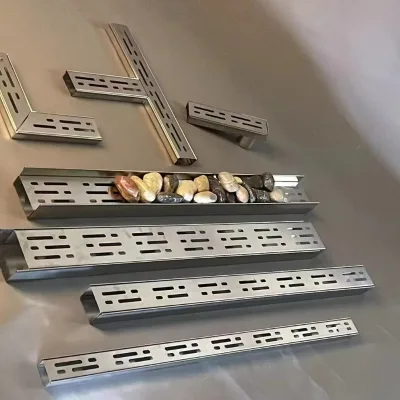
Stainless Steel 304/316 Horizontal Outlet Linear Shower Drain Floor Drain
$20.00 - $30.00
MOQ: 1 Pieces


Stainless Steel Traditional Channel Drain Linear Drain for Shower Room
$15.00 - $25.00
MOQ: 100 Pieces


$2.00 - $6.00
MOQ: 1 Pieces




Comprehensive Sourcing Guide
Strategic Sourcing Guide for Linear Drain Systems
Understanding Linear Drain Technical Specifications
When sourcing linear drains, buyers must first distinguish between the specific product categories and material compositions available in the current market. The supply landscape includes diverse configurations ranging from standard floor drains to specialized drainage systems designed for specific applications. A critical observation in the current inventory is the variation in material composition. Buyers will encounter products constructed from plastic, which offers cost-effective solutions for domestic wastewater applications, as well as stainless steel variants. For stainless steel options, the specific grades available include SUS 304 and 316, which are essential for environments requiring higher corrosion resistance. The surface treatment for these metal units is equally varied, with finishes ranging from polished and satin to electric polished and PVD coatings.
The physical dimensions and standard specifications of linear drains vary significantly depending on the model and intended use. Some units are defined by precise width and length ratios, such as a standard width of 70mm paired with lengths that can extend from 300mm up to 1500mm. Other models adhere to specific metric standards, such as 108mm widths with lengths available in increments of 600mm, 800mm, 900mm, 1000mm, and 1200mm. For custom projects, specifications may be entirely flexible, with sizes determined strictly according to buyer drawings. The strainer type is another technical differentiator; some units feature a lift-style strainer, while others utilize a dedicated strainer style. The model identifiers found in the market, such as SDS014, SDS020, SDS009-1, SD005, and WL-JDP Series, often correspond to these specific dimensional and functional configurations.
Compliance and Certification Verification
In the B2B procurement of drainage systems, verifying compliance with international and regional standards is non-negotiable. Buyers must scrutinize the certification status of potential suppliers to ensure the products meet safety and quality benchmarks. The market data indicates that certain products carry certifications such as SGS, ISO9001:2008, and ISO14001:2004. Additionally, specific regional approvals like the Watermark Typetest are available for certain drainage models. These certifications are not merely administrative; they validate that the manufacturing processes and final products have undergone rigorous testing for durability, safety, and environmental impact.
When evaluating a supplier, the buyer should request proof of these certifications rather than accepting them as general claims. The presence of an SGS standard is a positive indicator, but the specific scope of the certification must be confirmed. For products intended for use in swimming pools or high-moisture environments, the certification requirements may be more stringent. The standard "Width 70mm, Length 1000mm" or "4" x 4"" dimensions should be cross-referenced with the certification documents to ensure the tested model matches the ordered specification. It is also vital to note that while some products are certified, others may not carry these specific marks, requiring the buyer to conduct their own due diligence or request third-party testing.
Cost Drivers and Pricing Structures
The pricing of Linear Drain systems is influenced by a complex interplay of material costs, manufacturing complexity, and customization requirements. The observed price range in the market spans from $0.20 to $600.00 USD. This wide disparity is primarily driven by the material choice; plastic units generally occupy the lower end of the spectrum, while stainless steel units with specialized finishes like PVD or electric polishing command higher prices. The complexity of the surface treatment, such as the difference between a standard polish and a satin finish, also impacts the final cost.
Customization is a significant cost driver. Products that offer "Made to Measure" capabilities or require specific dimensions according to buyer drawings will inherently cost more than standard off-the-shelf models. The MOQ (Minimum Order Quantity) also plays a role in the unit price, with observed ranges spanning from 1 to 1000 units. Buyers ordering small quantities may face higher per-unit costs, whereas bulk orders can leverage economies of scale. Furthermore, the packaging requirements, which range from simple boxes to complex export packages involving PP bags, inner boxes, outer cartons, and pallets, add to the logistical costs. The origin of the product, whether from Ningbo, Hebei, or Fujian in China, can also influence the final landed cost due to varying logistics and labor rates associated with those specific regions.
Typical Applications and Installation Environments
Linear drains are versatile solutions designed for a wide array of applications, from residential bathrooms to commercial playgrounds. The market data highlights specific use cases, including domestic wastewater drainage, swimming pools, and general floor drainage. The application environment dictates the necessary material and finish. For indoor applications, such as bathrooms and gyms, the choice between plastic and stainless steel depends on the aesthetic requirements and the expected load. Stainless steel units with a silver color are often preferred for modern, high-end interiors, while brown-colored units may be selected for specific design themes.
The "Occasion" field in product specifications provides a clear guide for application suitability. Products are explicitly marked for use in playgrounds, gardens, gyms, and bathrooms. For swimming pool applications, the drainage system must be capable of handling high volumes of water and potentially corrosive chemicals, making the SUS 316 grade a prudent choice. The "Odour Proof" attribute is another critical factor for application selection. While some products are explicitly designed to be odour-proof, others are not. In environments where hygiene is paramount, such as commercial kitchens or high-traffic public restrooms, selecting an odour-proof unit is essential to prevent the escape of sewer gases. The "Kind" of the product, whether it is a manhole cover, floor drain, or sink strainer, must align with the specific installation point to ensure proper function.
Supplier Evaluation and Service Capabilities
Selecting the right supplier requires a thorough evaluation of their service capabilities and production flexibility. The market offers suppliers who provide OEM (Original Equipment Manufacturer) and ODM (Original Design Manufacturer) services, allowing buyers to brand products or request specific design modifications. This flexibility is particularly valuable for large-scale projects where branding or unique specifications are required. The availability of customization is a key differentiator; buyers should verify if the supplier can accommodate special requests, such as specific lengths or custom finishes.
The warranty period is another critical metric for supplier evaluation. A standard warranty of 5 years indicates a high level of confidence in product durability and manufacturing quality. Buyers should ensure that the warranty terms are clearly defined and cover the specific components of the Linear Drain system. The origin of the product is also a factor in supplier evaluation. Suppliers based in Ningbo, Hebei, or Fujian may have different logistical advantages and production capacities. It is advisable to assess the supplier's ability to maintain consistent quality across different batches, especially when dealing with custom orders. The packaging method, whether it is a standard export package or a more elaborate system involving pallets, can also reflect the supplier's attention to detail and commitment to protecting the product during transit.
Quality Control and Long-Term Procurement Considerations
Ensuring long-term reliability requires a robust quality control strategy. Buyers should prioritize suppliers who adhere to recognized standards such as ISO9001:2008 and ISO14001:2004. These standards indicate a commitment to quality management and environmental responsibility. The inspection of the product's surface treatment is crucial; finishes like polished, satin, or PVD must be uniform and free from defects that could compromise the product's appearance or function. The "Special" attribute of being "DIY & Made to Measure" suggests that the supplier should provide clear installation guides and support to ensure the product performs as intended after installation.
Long-term procurement considerations also involve the availability of spare parts and the ease of maintenance. Products with a "Lift" strainer kind may require specific tools or techniques for cleaning, which should be factored into the maintenance plan. The "Wastewater Type" is another consideration; systems designed for domestic wastewater may not be suitable for industrial applications without modification. Buyers should also consider the lead time and production capacity of the supplier, especially for large orders. The observed MOQ range of 1 to 1000 units suggests that suppliers can accommodate both small and large orders, but the lead time may vary accordingly. Finally, the "Standard Export Package" or similar packaging ensures that the product arrives in pristine condition, reducing the risk of damage and the need for replacements. By focusing on these quality control and long-term factors, buyers can secure a reliable supply of linear drains that meet their specific project requirements.
FAQs
What materials are available for linear drains?
Linear drains are available in plastic and stainless steel materials. Plastic options are suitable for domestic wastewater, while stainless steel variants include SUS 304 and 316 grades for enhanced corrosion resistance in demanding environments.
Which certifications should I verify for drainage systems?
You should verify certifications such as SGS, ISO9001:2008, and ISO14001:2004. Some products also carry regional approvals like the Watermark Typetest, which validate safety and quality benchmarks for specific applications.
How do dimensions vary across different Linear Drain models?
Dimensions vary significantly, with some models featuring a 70mm width and lengths from 300mm to 1500mm. Other units may have a 108mm width with lengths of 600mm, 800mm, or 1200mm, while custom sizes follow buyer drawings.
Can I customize the size and finish of the drain?
Yes, customization is available for specific dimensions and finishes. Buyers can request made-to-measure sizes based on drawings and choose from polished, satin, electric polished, or PVD finishes depending on aesthetic needs.
What is the typical price range for these products?
The price range spans from 0.20 to 600 USD depending on material and complexity. Plastic units generally cost less, while stainless steel units with specialized finishes or custom specifications command higher prices.
Which applications are suitable for these drainage systems?
These systems are suitable for bathrooms, swimming pools, playgrounds, and gyms. Specific models are designed for domestic wastewater or high-moisture environments, with some units explicitly marked for indoor use only.
What warranty periods are offered by suppliers?
A standard warranty of 5 years is commonly offered for these products. This indicates confidence in durability, though buyers should confirm specific terms cover the exact components and installation conditions.